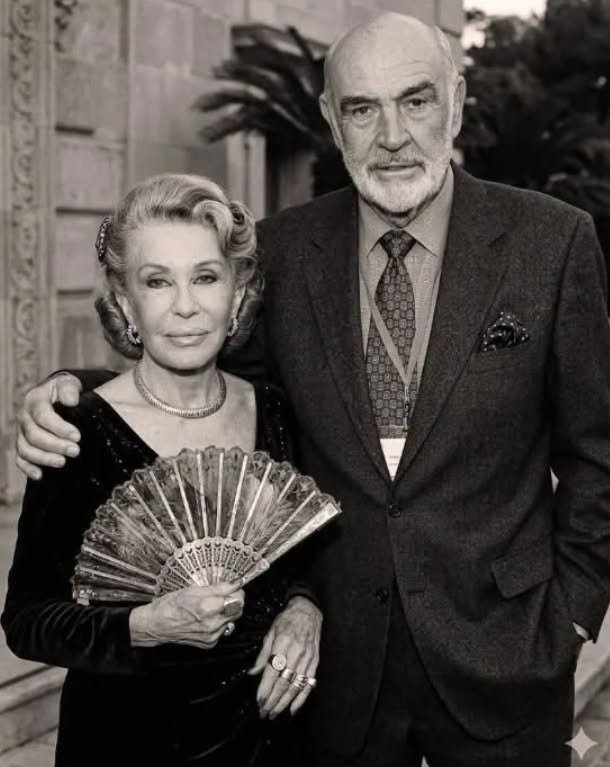
Sean Connery delivered milk before dawn, working while much of Edinburgh was still asleep, his hands exposed to the unforgiving Scottish cold. Decades later, his face, voice, and unmistakable presence would be recognized around the world. To millions of moviegoers, he became the embodiment of confidence, elegance, and controlled intensity.
Yet behind the three-piece suits, sophisticated image, and famous association with an unmixed, shaken martini was a man whose life had begun far from movie sets, premieres, and international fame. Long before audiences knew his name, Connery understood what it meant to work, to endure uncertainty, and to keep moving forward without the protection that wealth or privilege could provide.
His journey from a working-class childhood in Edinburgh to becoming James Bond seems almost like a movie in itself. But perhaps the most meaningful part of his story was not the fame that eventually surrounded him. Beneath everything else was a man who, perhaps without realizing it at first, was searching for something more lasting and more personal than celebrity.
A Childhood Without a Safety Net, an Extraordinary Strength
Sean Connery was born in 1930 in Edinburgh, in a working-class neighborhood where everyday life offered few luxuries. His father worked as a chauffeur, while his mother was a cleaning lady. The entire family lived together in a single room, a reality that left little space for comfort and even less room for the kind of grand ambitions that would later become associated with Connery’s extraordinary career.
On the surface, there was no obvious reason to imagine that the boy growing up in those circumstances would one day become one of the world’s most recognizable actors. His surroundings were practical and demanding. Life was less about dreaming of distant possibilities and more about getting through the day, helping the family, and understanding that necessities came before ambitions.
But those early circumstances gave Connery something that could not simply be purchased later in life: resilience. He learned early that difficult conditions did not disappear simply because they were uncomfortable. They had to be faced. That attitude would become part of the quiet strength people later recognized in his screen presence.
From his teenage years onward, Connery took a series of different jobs. He delivered milk in the early morning hours, worked on construction sites, and accepted all kinds of work. These jobs were not part of some carefully designed plan for future success. He was not trying to build an impressive résumé or prepare himself for Hollywood. The reason was much simpler and more immediate: his family needed help making ends meet.
The image of the future James Bond delivering milk through Edinburgh before dawn feels striking precisely because it is so far removed from the polished character audiences would later know. There were no tailored suits, glamorous destinations, or movie cameras. There was work to be done, and he did it.
Those difficult years helped shape the qualities that would eventually distinguish him. He developed a rare presence and a way of confronting hardship without constantly complaining about it. Instead of appearing defeated by difficult circumstances, he learned to face them directly, keeping his gaze forward.
That strength did not come from playing a character. It existed long before anyone asked him to stand in front of a camera. The confidence audiences would eventually associate with Connery had roots in a life where confidence was not simply a matter of appearance. It was connected to endurance, responsibility, and the experience of having to rely on yourself.
Chance as the Sole Casting Agent
Nothing about Sean Connery’s early life suggested an obvious path toward acting. There was no carefully planned childhood career, no long-established theatrical background, and no straightforward progression from acting school to major roles. His introduction to performance came in a far less predictable way.
While participating in bodybuilding competitions, Connery heard about auditions for theatrical productions. He did not have the experience or formal training that might have made such a decision seem natural. Still, he decided to try his luck.
That decision was important precisely because there was no guarantee attached to it. He was stepping into unfamiliar territory without knowing whether he truly belonged there. The world of acting was very different from the practical jobs he had known, and simply appearing at an audition did not erase the disadvantages of being inexperienced.
The beginning of his acting career was anything but glamorous. The roles available to him were tiny, and rejection was common. There was no immediate transformation from unknown newcomer to celebrated leading man. Instead, there was the much less romantic reality of trying, being turned down, accepting small opportunities, and continuing anyway.
Even some of the qualities that would later become essential parts of his identity were initially treated as obstacles. His strong Scottish accent drew criticism, while his appearance was considered too rustic for the standards of the period. The characteristics that eventually made Connery distinctive did not automatically fit the expectations placed on aspiring actors at the time.
But there was something that could not easily be dismissed. Connery had presence. When he entered a room, he seemed to occupy the space without having to fight for attention. He did not need exaggerated gestures to be noticed. There was a physical confidence about him, combined with a certain restraint, that made people look twice.
That quality became increasingly important as he continued pursuing acting. Technique and experience could develop over time, but his natural ability to command attention was already there. Even before the world knew exactly what to do with Sean Connery, it was becoming increasingly difficult to ignore him.
« That Man Is Bond. »
In 1962, the producers of Dr. No were searching for an unknown actor to take on the role of James Bond. The character required a difficult balance. Bond had to project elegance without appearing fragile, danger without constant aggression, and charm without losing the sense that he could take control of a situation at any moment.
The producers hesitated over Connery. His path had hardly resembled that of a conventional polished leading man. The working-class Edinburgh boy with the strong Scottish accent was not an obvious choice on paper.
Ultimately, according to the story, it was the director’s wife who helped settle the question after encountering Sean in the street. Her reaction was immediate: « This man is perfect for the role. »
It was an observation based not merely on what Connery could say in an audition room, but on how he carried himself. The quality that had followed him through his early acting years—the effortless way he occupied a space—was exactly what the role needed.
She was right.
Dr. No became a triumph, and the consequences for Connery’s life were enormous. The former Edinburgh milkman was suddenly transformed into the face of the world’s most famous fictional spy. The contrast could hardly have been greater.
Audiences responded to the combination of qualities he brought to Agent 007. There was elegance and charm, but also a calm intensity. His gaze could suggest confidence without requiring an explanation. His physical presence gave Bond an underlying toughness, while his composure made the character seem completely at ease in sophisticated surroundings.
Connery did not simply wear Bond’s clothes. For entire generations of moviegoers, he helped define what James Bond looked and felt like on screen. His interpretation became a reference point against which the character would continue to be understood.
The qualities that had once seemed potentially unsuitable—the ruggedness, the distinctive background, the sense that he was not manufactured according to conventional expectations—became part of what made his Bond so memorable.
But extraordinary fame brought another problem. The more successful James Bond became, the more closely Connery himself became associated with the character. To the public, the line between actor and role could easily begin to disappear.
Connery feared being reduced to a single character more than almost anything else. However extraordinary the opportunity had been, he did not want his entire identity to be compressed into two words: James Bond.
Being recognized everywhere as Agent 007 could be flattering, but it could also become a kind of limitation. Connery was a man before he was a movie character, and his life had already contained years of experiences that had nothing to do with espionage, tailored suits, or cinematic glamour.
The question was no longer whether Sean Connery could become famous. He already had. The more complicated question was whether he could preserve a life and identity beyond the fame that now followed him.
See more on the next page
For Complete Cooking STEPS Please Head On Over To Next Page Or Open button (>)