Ingredients You’ll Need
For the Caramelized Onions
- 2 tablespoons butter
- 2 large yellow onions, thinly sliced
- ¼ teaspoon salt
- 1 teaspoon brown sugar, optional
For the Beef Patties
- 1 pound ground beef, preferably 80/20
- 1 teaspoon Worcestershire sauce
- ½ teaspoon garlic powder
- ½ teaspoon onion powder
- ½ teaspoon salt
- ¼ teaspoon black pepper
For the Sandwiches
- 8 slices rye bread, sourdough, or sturdy white bread
- 4 slices Swiss cheese
- 4 slices cheddar cheese
- 3–4 tablespoons softened butter
Optional Sauce
For a classic diner-style sauce, mix:
- ¼ cup mayonnaise
- 1 tablespoon ketchup
- 1 teaspoon yellow mustard
- 1 teaspoon sweet pickle relish
Stir everything together and refrigerate until ready to use.
What Bread Is Best for a Patty Melt?
Rye bread is the classic choice and brings a slightly tangy flavor that works beautifully with the beef, onions, and cheese.
But don’t worry if rye isn’t your favorite.
You can also use:
- Sourdough
- Texas toast
- Thick-cut white bread
- Country bread
- Multigrain bread
The important thing is to choose bread that’s sturdy enough to hold the juicy beef and onions without falling apart.
What Cheese Should You Use?
Swiss cheese is a classic patty-melt choice because it melts beautifully and has a slightly nutty flavor.
Cheddar is another excellent option.
You can also use:
- American cheese
- Provolone
- Gruyère
- Monterey Jack
- Pepper Jack
And yes, you can absolutely mix cheeses.
Swiss and cheddar together are especially delicious.
How to Make a Classic Patty Melt
Step 1: Caramelize the Onions
Melt the butter in a large skillet over medium-low heat.
Add the sliced onions and sprinkle with salt.
Cook slowly for about 20–25 minutes, stirring occasionally, until the onions are very soft and deeply golden.
If they begin browning too quickly, lower the heat.
You want them caramelized, not burned.
For a slightly sweeter flavor, stir in the brown sugar during the final few minutes.
Transfer the onions to a bowl and set aside.
Step 2: Prepare the Beef
Add the ground beef to a bowl.
Add Worcestershire sauce, garlic powder, onion powder, salt, and black pepper.
Mix gently until just combined.
Don’t overwork the meat or your patties can become dense.
Divide the beef into four portions.
Shape each portion into a thin patty that’s slightly larger than your bread slices.
The patties will shrink a little as they cook.
Step 3: Cook the Patties
Heat the same skillet over medium-high heat.
Add the patties and cook for approximately 3–4 minutes per side, depending on thickness and desired doneness.
For food safety, ground beef should reach 160°F (71°C) internally.
Once cooked, transfer the patties to a plate.
Step 4: Assemble the Sandwiches
Butter one side of each slice of bread.
Place the bread butter-side down.
Add cheese, followed by a beef patty, caramelized onions, and another slice of cheese.
Top with the second slice of bread, keeping the buttered side facing outward.
If you’re using the optional sauce, spread a thin layer on the inside of the bread before adding the filling.
Step 5: Toast the Patty Melts
Reduce the skillet to medium-low heat.
Place the assembled sandwiches in the skillet.
Cook for about 2–4 minutes per side, pressing gently with a spatula as they cook.
You want the bread deeply golden and crisp while the cheese melts completely.
If the bread is browning before the cheese melts, lower the heat.
Step 6: Rest and Slice
Transfer the finished patty melts to a cutting board.
Let them rest for a minute or two.
Then slice each sandwich in half.
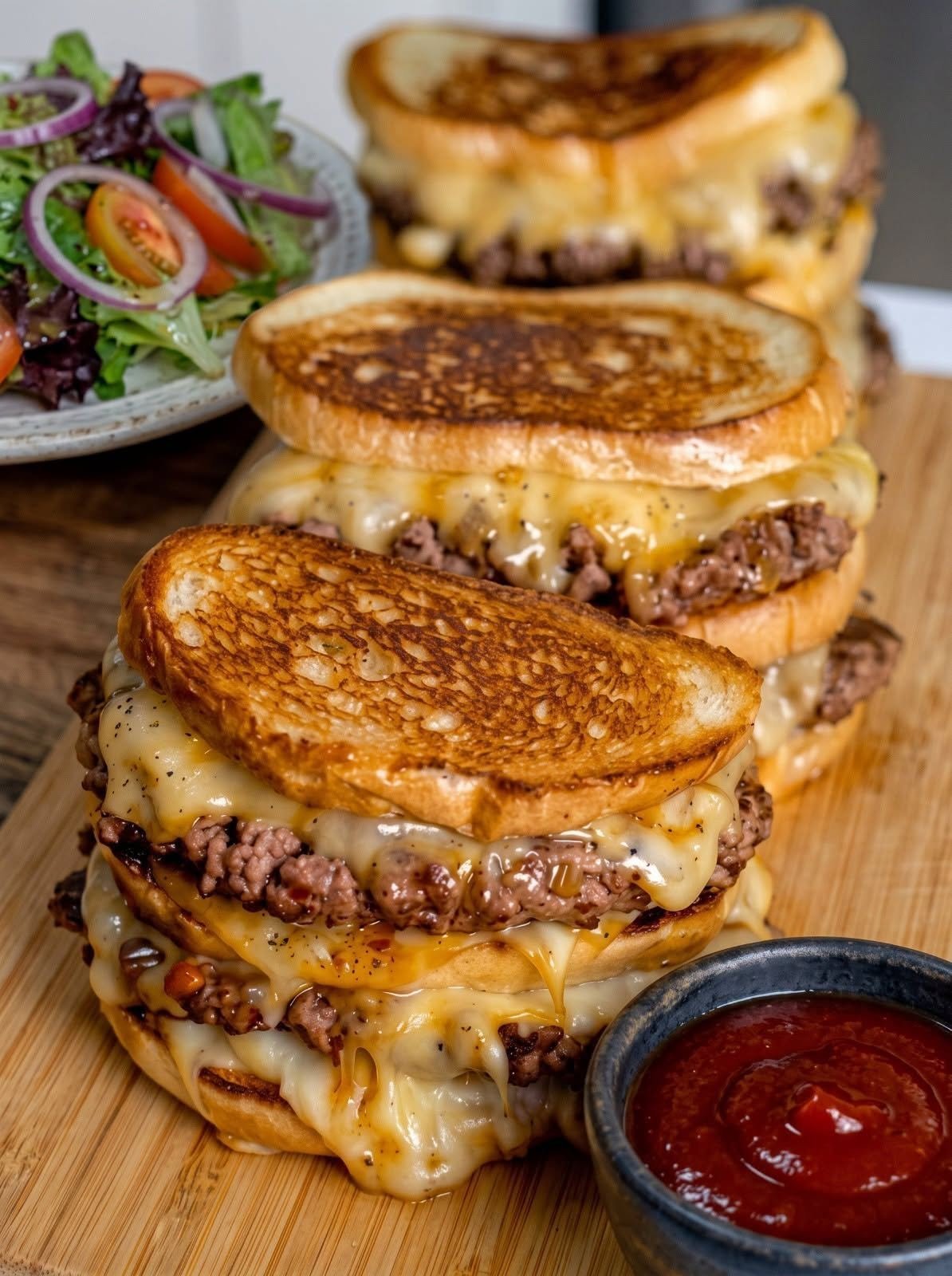
Look at that cheese!
Now you’re ready to serve.
The Secret to Great Caramelized Onions
Don’t rush them.
This is one of those recipes where patience really pays off.
Cooking the onions over medium-low heat allows their natural sugars to develop slowly.
You don’t need to add lots of sugar to get beautifully sweet onions.
You simply need enough time.
If your onions start sticking, add a tiny splash of water and scrape up the flavorful browned bits from the bottom of the pan.
Tips for the Best Patty Melt
Use 80/20 Ground Beef
The extra fat helps keep the patties juicy and flavorful.
Lean ground beef can work, but the sandwich may be less rich.
Don’t Overmix the Beef
Mix the seasoning into the meat gently.
Overworking ground beef can produce a tough patty.
Make the Patties Thin
A patty melt is easier to eat when the beef isn’t extremely thick.
Thin patties also allow the cheese, onions, and bread to shine.
Cook the Sandwich Over Medium-Low Heat
This is important.
If the skillet is too hot, the bread can burn before the cheese melts.
Low and slow gives you that gorgeous golden crust.
Don’t Skimp on Butter
That buttery exterior is part of what makes a patty melt so good.
Spread the butter all the way to the edges of the bread.
Let the Cheese Melt
If the bread is browning too quickly, lower the heat.
The goal is crisp bread and melted cheese.
Not one or the other!
Easy Patty Melt Variations
Bacon Patty Melt
Add a couple of slices of cooked crispy bacon.
Because apparently there’s no such thing as too much comfort food.
Mushroom Patty Melt
Sauté sliced mushrooms with the onions for an earthy variation.
Spicy Patty Melt
Use Pepper Jack cheese and add sliced jalapeños.
BBQ Patty Melt
Add a thin layer of barbecue sauce to the sandwich.
Garlic Butter Patty Melt
Mix a little garlic powder or minced parsley into the softened butter before spreading it on the bread.
Double Cheese Patty Melt
Use two different cheeses for extra flavor.
Try Swiss with cheddar or provolone with American cheese.
What to Serve With a Patty Melt
A patty melt is practically asking for a classic side dish.
Serve it with:
- French fries
- Sweet potato fries
- Onion rings
- Potato wedges
- Coleslaw
- Pickles
- Potato salad
- Side salad
- Tomato soup
- Macaroni salad
For the full diner experience, add a crunchy dill pickle on the side and some crispy fries.
Now we’re talking!
Can I Make Patty Melts Ahead of Time?
You can prepare some components ahead, but patty melts are best assembled and toasted just before serving.
The caramelized onions can be made a day or two ahead and refrigerated.
You can also prepare the beef patties several hours ahead and keep them refrigerated until you’re ready to cook.
For the best bread texture, wait until mealtime to assemble and toast the sandwiches.
How to Store Leftover Patty Melts
Patty melts are best fresh, but leftovers can be refrigerated in an airtight container for up to 3–4 days.
For the best texture, reheat them in a skillet or toaster oven rather than the microwave.
A skillet will help bring some crispness back to the bread.
Can You Freeze Patty Melts?
It’s possible, but freezing the fully assembled sandwich isn’t ideal because the bread can lose some of its crisp texture.
If you want to freeze components, cooked beef patties and caramelized onions can be frozen separately.
Thaw them safely in the refrigerator and assemble fresh sandwiches when you’re ready to eat.
Frequently Asked Questions
What makes a patty melt different from a hamburger?
A patty melt typically uses sliced bread instead of a hamburger bun and is grilled like a toasted sandwich. Caramelized onions and melted cheese are also classic components.
What kind of bread is traditionally used?
Rye bread is one of the most traditional choices, although sourdough and other sturdy sliced breads work beautifully.
Can I use ground turkey?
Yes. Ground turkey can be substituted for beef, although the flavor and texture will be leaner.
Cook ground turkey to the safe internal temperature recommended for poultry.
Why are my onions not caramelizing?
The heat may be too low, or the pan may be overcrowded. Give them time and stir occasionally. Caramelization can take 20–30 minutes or longer depending on the quantity and pan.
Why is my bread burning before the cheese melts?
The heat is probably too high. Reduce the skillet to medium-low and give the sandwich more time.
Can I use American cheese?
Absolutely. American cheese melts extremely well and gives the sandwich that classic diner-style cheesiness.
Can I make the patties thicker?
You can, but thin patties are generally easier to layer into a sandwich and allow the cheese and onions to remain prominent.
Can I make a patty melt without onions?
Of course. But the caramelized onions are one of the signature parts of a classic patty melt, so I’d definitely recommend trying them at least once!
Recipe Information
Prep time: 10 minutes
Caramelizing onions: 20–25 minutes
Cooking time: 10–15 minutes
Total time: About 40–50 minutes
Servings: 4 patty melts
Cuisine: American
Category: Sandwich / Dinner
Cooking method: Stovetop
Approximate Nutrition Information
Nutrition will vary depending on the bread, cheese, beef, butter, and sauce used.
One patty melt with cheese and caramelized onions is approximately:
- Calories: 650–750
- Protein: 35–40g
- Carbohydrates: 40–50g
- Fat: 38–45g
- Saturated fat: 16–20g
- Fiber: 3–5g
- Sodium: 900–1,200mg
Adding bacon, extra cheese, or sauce will increase the nutritional values.
Final Thoughts
A Classic Patty Melt is proof that you don’t need an elaborate recipe to make an unforgettable dinner.
Give me a juicy beef patty, sweet caramelized onions, melted cheese, and golden buttery bread, and I’m happy.
The trick is really in the little things: don’t rush the onions, don’t overwork the beef, and keep the skillet at a moderate temperature when you’re toasting the sandwich.
Do that, and you’ll end up with that irresistible combination of crispy, cheesy, juicy, and savory in every bite.
It’s old-fashioned comfort food at its best.
And honestly, once that first patty melt hits the skillet and the butter starts sizzling around the bread, you’re going to understand why this classic has stuck around for so long.
Did You Make This Recipe?
If you make these Classic Patty Melts, I’d love to hear what you think!
Leave a review and tell me what cheese you used, whether you added bacon or mushrooms, or if you kept things perfectly classic.
And if you take a photo, share it on Pinterest so other comfort-food lovers can find the recipe too!
Sometimes the simplest recipes are the ones worth passing around.
For Complete Cooking STEPS Please Head On Over To Next Page Or Open button (>)